
How Delia Derbyshire Made the Doctor Who Theme by Hand
Delia Derbyshire built the original Doctor Who theme at the BBC Radiophonic Workshop in 1963. She cut individual notes out of magnetic tape, played the parts from separate decks, and traced a wrong join by unrolling three reels down a corridor. The session shows how early electronic music was built one splice at a time.
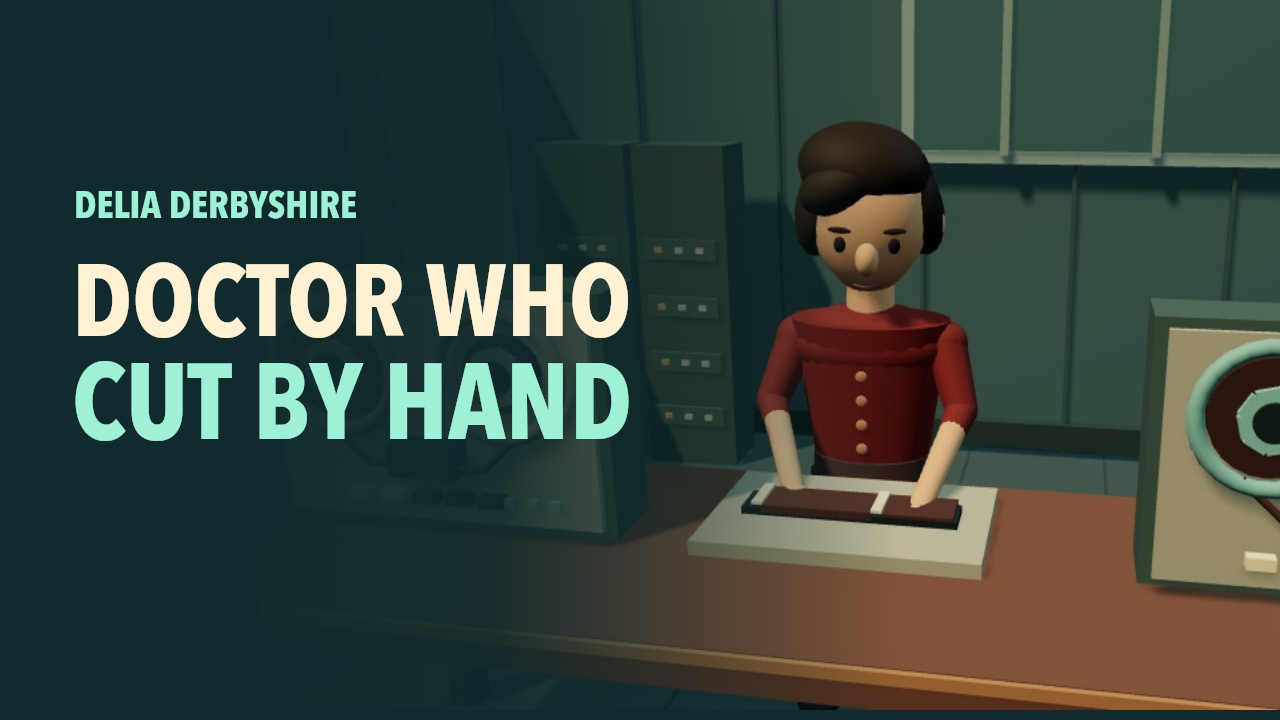
Transcript
Delia Derbyshire made the original theme for Doctor Who.
She cut individual notes out of magnetic tape.
Set the spaces between the pieces and you have a rhythm. Put several tapes in motion together and you can hear a whole arrangement.
When the parts went out of step, the people making the theme had to unwind the reels down a BBC corridor. There was a mistake in there somewhere, and they meant to find it by eye.
The BBC was making a new Saturday television serial in nineteen sixty-three. Its producer, Verity Lambert, arranged for the composer Ron Grainer and the Radiophonic Workshop to work together on the theme.
The Workshop at Maida Vale supplied sounds that a conventional session could struggle to produce. Its tools were tape machines, studio gear, and whatever else made a useful noise.
Grainer brought a page of manuscript. It set out a tune and a rhythm, with suggestions for the sounds around them. At the bench, Derbyshire took that page apart into things she could make one at a time.
Start with the bass. It has the sharp front edge of something being plucked. Even the people close to the recording gave different accounts of exactly what produced that twang.
The point is what happened after it was recorded. Play the tape slower and that first contact drops in pitch and takes longer to pass. Play it faster and it gets shorter and higher.
Here is a new example. The same little pluck, first low and slow, then high and short. You can change the note without changing the object that made the sound.
The tune itself used an oscillator. That is a box that can generate a steady electronic tone. Turn its dial while the tape is recording and the pitch can slide between notes.
Then there was noise. A burst of hiss, shaped and cut short, could sit in the gaps and give the track some air around the bass and the tune.
Listen to these three sounds separately. A pluck has an edge. A tone can hold on. A little hiss can disappear almost as soon as it arrives. You could build very different jobs out of them.
Once you have the sound of a note, you still have to decide when it starts and how long it stays. On tape, that becomes a question of length.
Lay the tape in a cutting block. Cut a piece to length. Join it to the next piece with a small strip of splicing tape on the back.
A gap can be a measured length of silence. Want the next note a fraction earlier? Shorten the gap. A passage could have dozens of those decisions, every one made with a physical strip on the table.
Once the pieces are joined, a tape machine plays the sequence in order. The rhythm is already in the strip before anyone presses play.
The bass, the melody and the extra sounds could now live on separate tapes. The hard part was getting those reels to play as one piece of music.
The sound engineer Dick Mills remembered starting the machines together with Derbyshire. As the reels turned, the parts went into a single mix. Get a start wrong and a part could fall behind.
And when something sounded wrong even with the starts lined up, you had to look inside the edit itself. Somewhere among all those joins was a strip of tape that had made it into the wrong place.
Mills remembered how they found it. They took the three reels into the corridor at Maida Vale and ran the tapes out alongside each other.
They followed the joins down the corridor. An unexpected splice broke the pattern. Mills called it a wrong note, but what his eye found was a place where one tape no longer lined up.
Back at the cutting block, a mistake in the music could be removed as a piece of tape. The next time the parts ran together, they could keep time with each other again.
On the twenty-third of November, the first episode of Doctor Who went out. A viewer switching on that evening got the finished sound in one piece. The joins were back in a BBC building.
Grainer had written the theme. The note-by-note work that made it sound the way it did belonged to Derbyshire and the Workshop. The BBC credited the department rather than naming its staff individually.
What still feels strange about that recording is the way the sounds move. You can hear a note slide, a rhythm gather under it, and the space change around both. The work that made it feel so free began with a ruler and a little strip of tape.