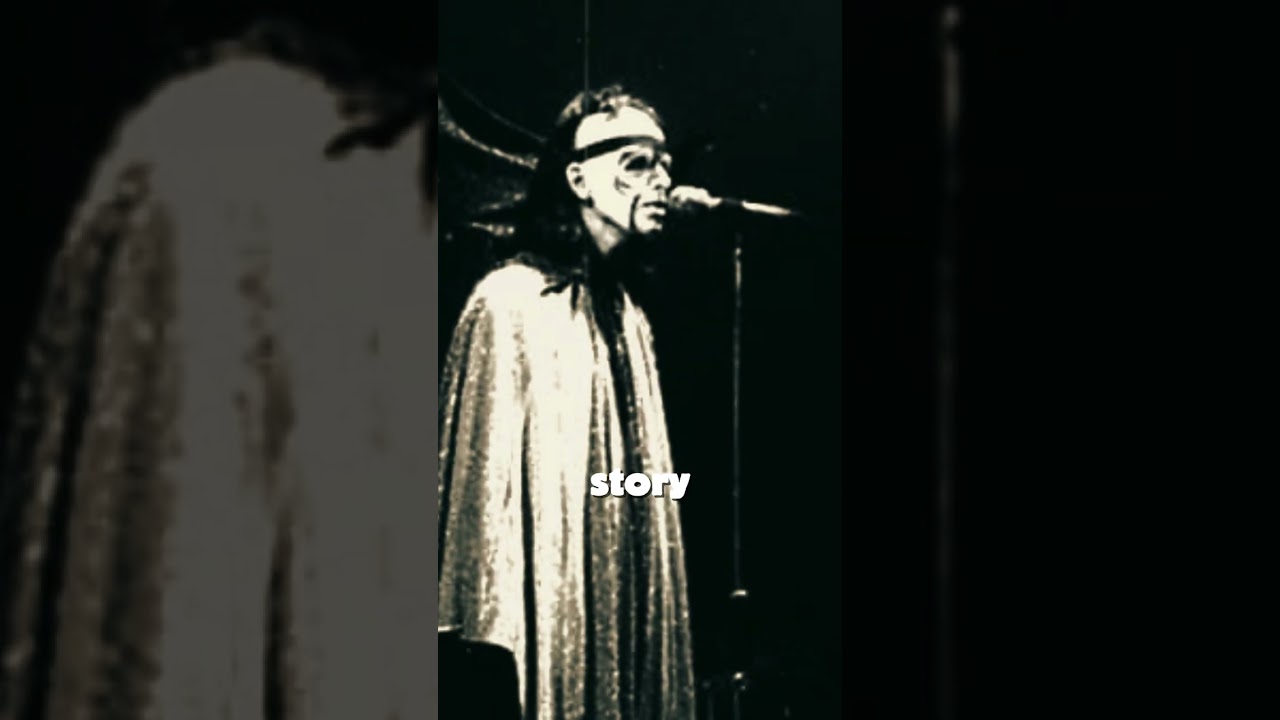
Genesis's The Lamb Lies Down on Broadway is a 1974 double concept album about Rael, a Puerto Rican street kid pulled from New York into a surreal underground journey. It was also Peter Gabriel's final studio album with Genesis, which makes the record sound like more than a story. It sounds like one version of the band reaching its limit in public.
Gabriel did not leave after a normal record. He left after the most Peter Gabriel album possible.
What is The Lamb Lies Down on Broadway about?
The story begins in New York. Rael sees a dark wall move across Times Square, is swept into another reality, and passes through cages, corridors, seductive Lamia, slippermen, bodily transformations, and repeated encounters with his brother John.
The plot is deliberately unstable. It borrows the motion of a street story, a dream, a myth, and a private identity crisis without settling into any one of them. By the final track, “it,” Rael and John collapse into the same question of self.
That does not mean every symbol has one answer. The album lasts because it resists becoming a solved puzzle. The useful way in is emotional: Rael spends the record acting hard while the world removes every stable idea he has about his body, his brother, and himself.
The official Genesis edition preserves the complete original story and its 23-track journey. Peter Gabriel's official account of the anniversary edition calls the album a landmark and documents new interviews with Gabriel, Tony Banks, Phil Collins, Steve Hackett, and Mike Rutherford.
Who wrote the album?
Gabriel conceived Rael's story and took primary responsibility for the lyrics. The music came from Genesis as a band, often developed through group writing and improvisation.
That split explains the record's tension. The words keep pulling toward Gabriel's private film while the playing remains unmistakably collective. Tony Banks gives “In the Cage” its trapped momentum. Mike Rutherford and Steve Hackett make “Fly on a Windshield” move from stillness into physical force. Phil Collins holds together music that keeps changing shape.
Brian Eno also treated Gabriel's vocals on several passages, a contribution credited in the album's history with the phrase “Enossification.” The collaboration points toward the more textural studio language Gabriel would explore after Genesis.
But the detail people miss is that the band's conflict did not make the music sound fragmented. On the strongest passages, the pressure creates unity. “Back in N.Y.C.” is brutal, “The Carpet Crawlers” is patient, and “The Waiting Room” lets Genesis become almost unrecognizable through improvisation.
Why was the stage show so difficult?
Genesis toured the album as a complete theatrical work in 1974 and 1975. Gabriel performed as Rael while slides, costumes, props, and tightly sequenced music attempted to turn the double LP into a moving visual narrative.
The ambition was obvious. So were the practical problems. A show this synchronized leaves little room for equipment failure or spontaneous repair. Gabriel's costumes could dominate how the audience understood the band, even while four other musicians were executing unusually demanding material behind him.
The production made Genesis look larger than ever, but it also made the imbalance inside the group's public image impossible to ignore. The frontman had become the story's face, author, narrator, and changing body.
Did The Lamb cause Peter Gabriel to leave Genesis?
It would be too simple to blame one album. Gabriel was balancing the band's schedule with a family crisis around the birth of his daughter, and his interest in projects beyond Genesis was growing. The group also had real disagreements about control, workload, and the attention placed on its singer.
The Lamb concentrated those pressures. Gabriel informed the group during the tour that he would leave, and the split became public in 1975. Genesis did not immediately know what its next identity would be.
Then the real surprise arrived: the band survived.
Phil Collins moved from drummer and backing vocalist to lead singer, first in the studio and then onstage. Genesis became a different group without pretending the earlier one had never existed. Peter Gabriel built a solo career that continued many of The Lamb's interests in character, technology, rhythm, and visual storytelling.
The album therefore works as both an ending and an origin. It closes the Gabriel era while revealing ideas that both sides would carry forward separately.
The Lamb Lies Down on Broadway still matters because Genesis turned a band identity crisis into a world strange enough to live in for four sides.
Watch and keep reading
- Watch “Peter Gabriel's Last Genesis Album Explained” on YouTube
- See where its songs land in the 100 greatest progressive-rock songs
- Read how Phil Collins prepared for his Genesis audition
- Explore the 100 most influential progressive-rock albums